Internship & Career Opportunities
A recap of our session on the Structural Internship Framework — why career planning starts in first year, what actually makes an internship worth doing, and how to build a resume when you think you have "no experience."
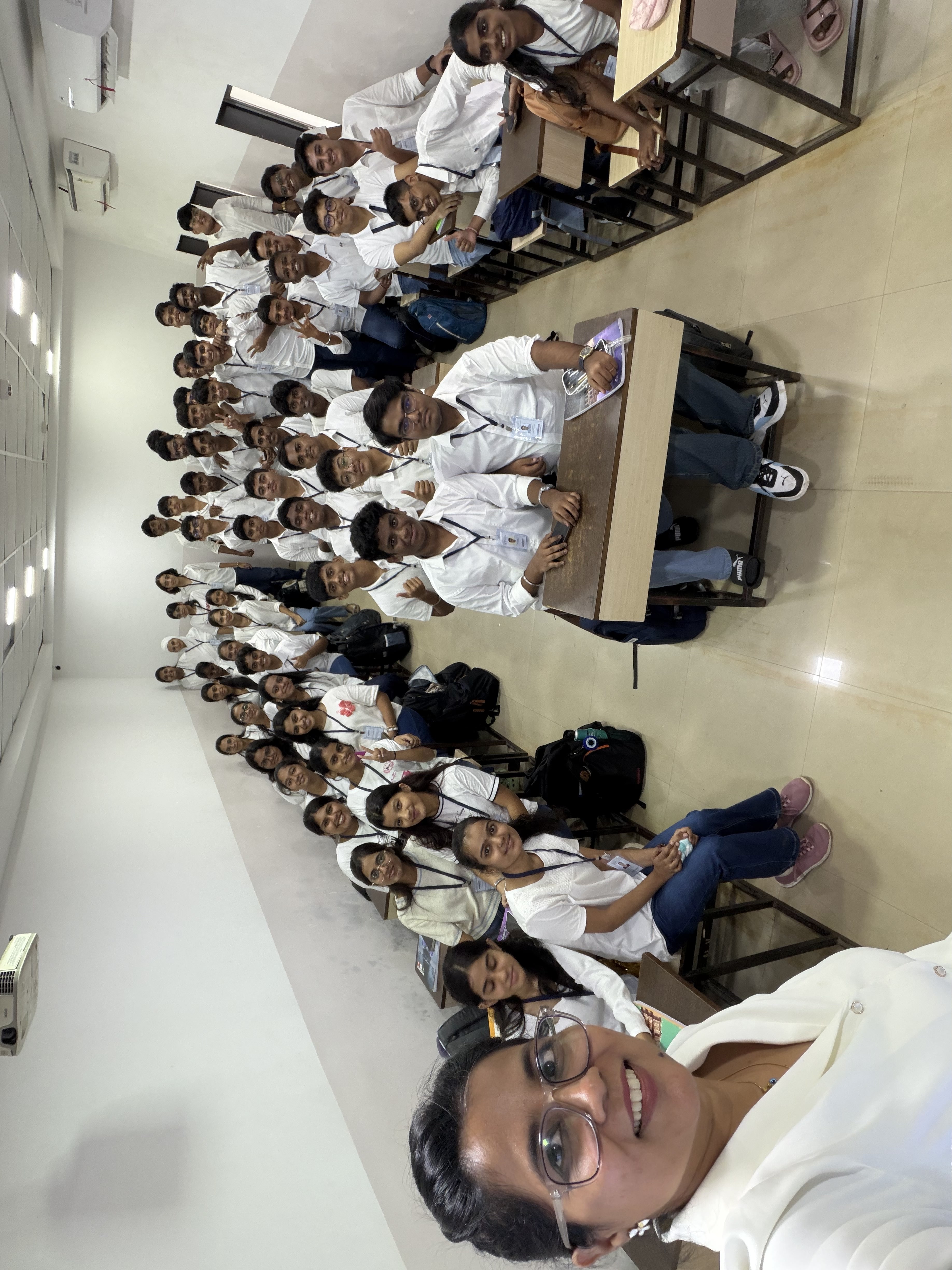
Your career doesn't start in your final year. It starts with the choices you make today — and for most students, "today" is still first year, still figuring out what an internship even is. Our recent session on the Structural Internship Framework (SIF) was built around exactly that gap: turning classroom learning into career readiness, one deliberate step at a time.
Why Talk About Careers in First Year?
The framework breaks the journey into three stages: first year is for exploring, second year is for building skills, and third year is for gaining experience and launching. Waiting until placements season to think about any of this means starting the race already behind.
What Is an Internship, Really?
Internship = Learning + Experience + Exposure. It's a short, real-world experience that connects classroom learning to professional life — not a certificate to collect, but a chance to work in a real environment, tackle real problems, and understand what's actually expected of you once you're being paid for your time.
"A certificate can show that you attended. A project can show what you can actually do."
That distinction matters more than it sounds. Two students can both list "10 courses completed" or "3 real projects built" — and employers know exactly which one they'd rather interview.
What Employers Actually Ask
Companies don't just want to know what you studied. They want to know: can you apply what you studied? When an employer looks at a candidate, the real question in their head is simple — "What did you actually build?"
An internship helps you answer that question with proof instead of a transcript. It also does something students rarely expect: it helps you discover what you don't want to do, which is just as valuable as finding what you do.
The Structural Internship Framework (SIF)
The framework moves students from exposure to expertise across three stages:
- Mini Internship (First Year) — 2-3 days of short-term industry exposure. Focus: orientation to industry practices. Outcome: industry awareness.
- Skill Internship (Second Year) — 1-2 weeks of hands-on skill-building workshops. Outcome: skill competence.
- Core Internship (Third Year) — 12 weeks of credit-based, on-the-job training with real projects. Outcome: career readiness.
Each stage runs through the same loop: learning → experience → a real project → feedback → career readiness.
Skills to Start Building Now
Skills stack in layers, and each layer depends on the one below it:
| Level | Focus areas |
|---|---|
| Level 1 — Foundation | Communication, English, problem solving, computer fundamentals |
| Level 2 — Technical | C / C++ / Python, HTML/CSS, SQL, Git & GitHub |
| Level 3 — Professional | Teamwork, presentation, documentation, time management |
| Level 4 — Career | Projects, internships, resume, LinkedIn, interview skills |
You can't skip straight to Level 4 — a strong resume and LinkedIn profile only carry weight when the layers underneath are real.
Where to Actually Find Opportunities
Internships show up in more places than students expect: college and IIIC opportunities, company websites, LinkedIn, internship platforms, startups, hackathons, faculty references, industry events, networking, and government skill-development programs.
One rule cuts across all of them: never pay someone simply because they promise a certificate or a job.
How to Tell a Good Internship from a Red Flag
A good internship has:
- A genuine learning opportunity
- An available mentor
- Real project work, not busywork
- A clearly defined duration and responsibilities
- Feedback along the way
- A certificate or experience letter at the end
Be careful of internships that are:
- Only certificate-focused, with no actual work given
- Built on unrealistic job promises
- Asking for large upfront payments
- Missing a mentor or any support structure
Your First Resume Doesn't Need to Be Five Pages
One page is enough. If you're worried about having "no experience," the fix isn't to pad the resume — it's to show your learning and projects instead: name and contact, career objective, education, technical skills, mini projects, certifications and workshops, achievements, and extracurriculars.
Build a Digital Identity, Not Just a Resume
"Don't just say you know something. Show it." Four platforms do the showing for you:
- LinkedIn — your professional identity
- GitHub — proof of technical work
- Portfolio — a showcase of your projects
- YouTube / Blog — proof of knowledge and communication skills
Start Small: Projects Worth Building
You don't need an ambitious final-year project to start. A Python calculator, a personal portfolio site, a simple mobile app, a weather application, a student result system, a password strength checker, a simple AI chatbot, or a student database system — any of these is a legitimate starting point. The progression is simple: mini project → internship project → industry project.
Internship ≠ Placement
It's worth being precise about this distinction. An internship is learning + experience + industry exposure. A placement is a job opportunity + a professional career. They're not the same thing — but a good internship measurably increases your chances of landing a good placement.
What Industry Expects From You
If you were the employer, what would you actually look for? Ten things kept coming up: technical knowledge, communication, adaptability, professional attitude, discipline, problem-solving ability, teamwork, willingness to learn, project experience, and curiosity. Only one of those ten is purely technical.
The Takeaway
Start early. Learn continuously. Build something. Get experience. Create your own opportunity.
Your first year is not "too early" to start your career — it is the best time to start.