Top C++ Interview Questions
A concise, interview-ready rundown of the C++ questions that come up again and again — covering OOP, memory management, STL, and modern C++ — with straight-to-the-point answers.
A calm space for deep technical dives, slow thoughts, and engineering reflections. No noise — just meaning.

A hands-on introduction to multithreading in C++ — how to launch threads with std::thread, why race conditions happen, and how mutexes and lock guards keep shared data safe.

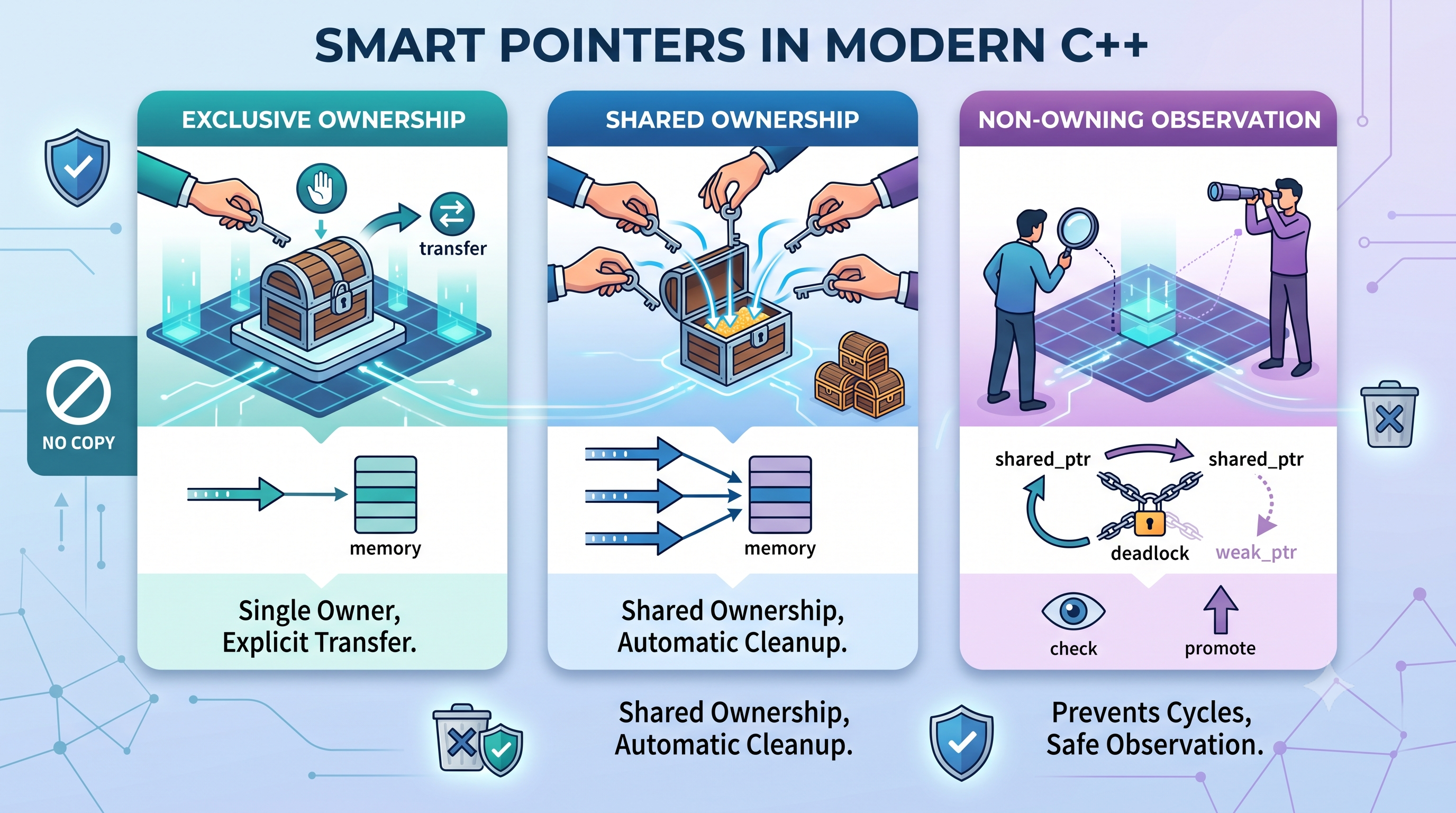
A practical guide to modern C++ smart pointers — why they replaced manual new/delete, how unique_ptr, shared_ptr, and weak_ptr each work, and when to reach for which one.

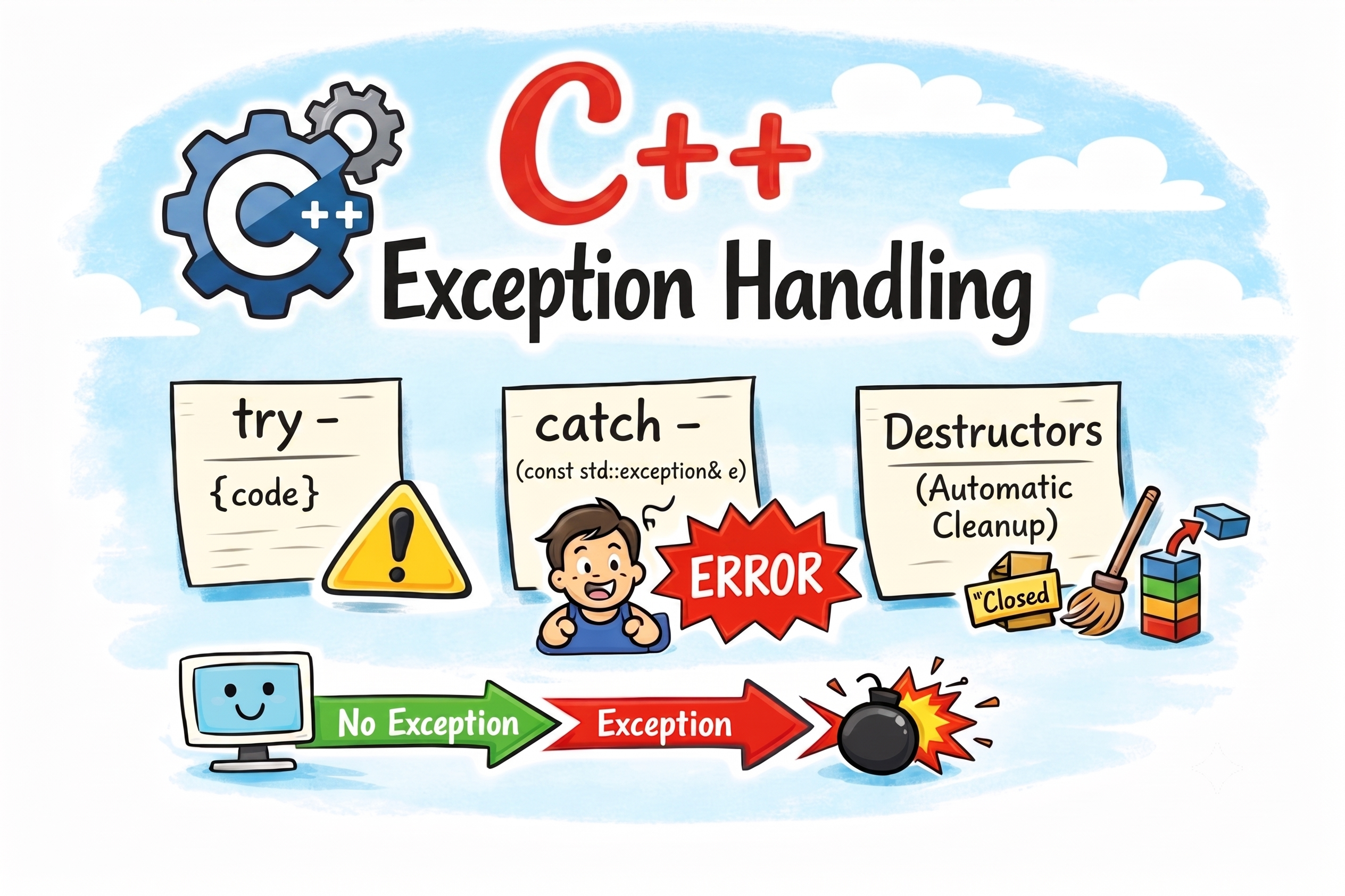
A practical guide to exception handling in C++ — how try, catch, and throw work together, standard exception types, writing custom exceptions, and how exceptions interact with RAII.

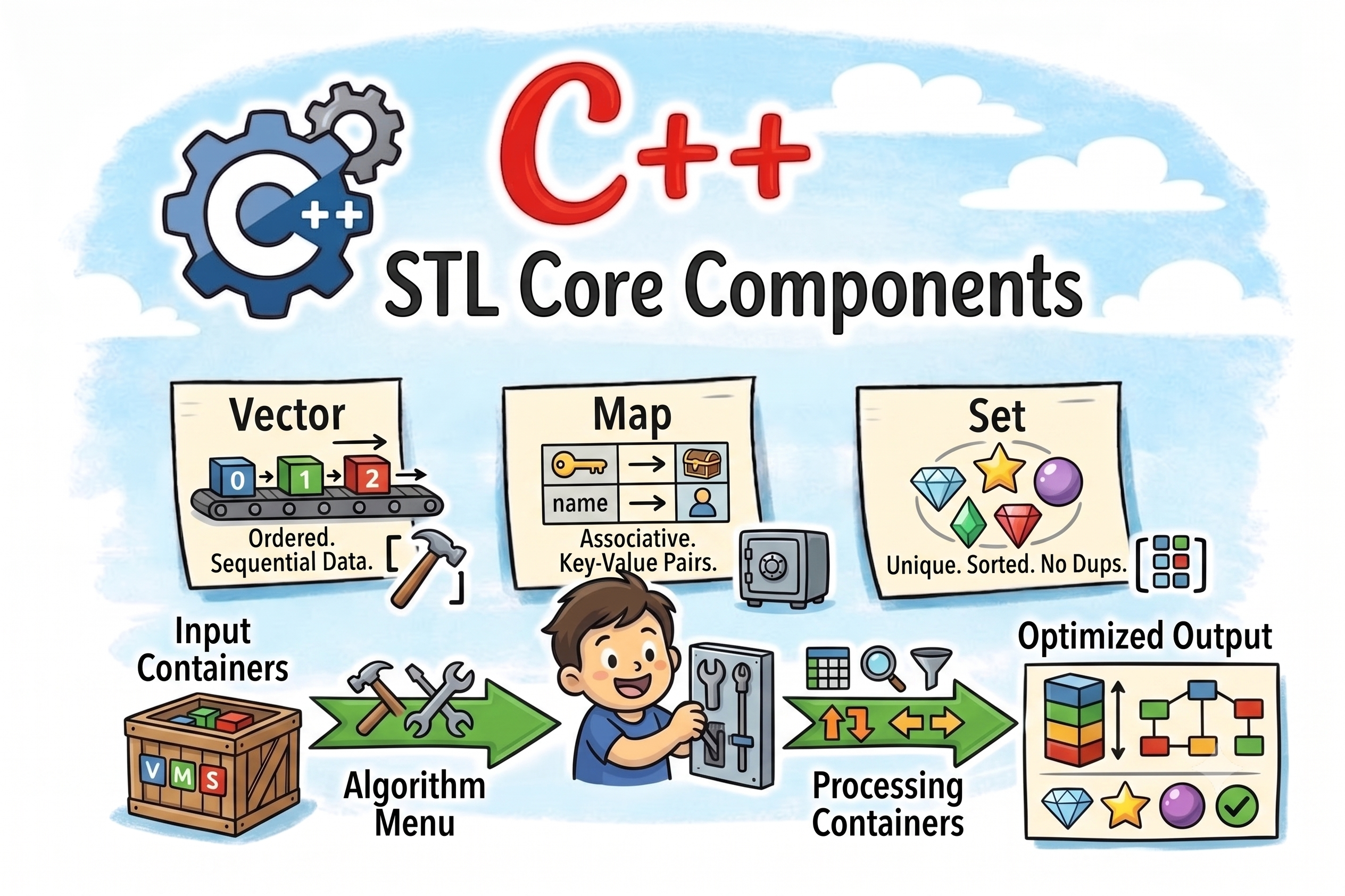
A practical tour of the C++ Standard Template Library — containers like vector, map, and set, the algorithms that work across all of them, and why STL is the toolkit every C++ developer reaches for daily.

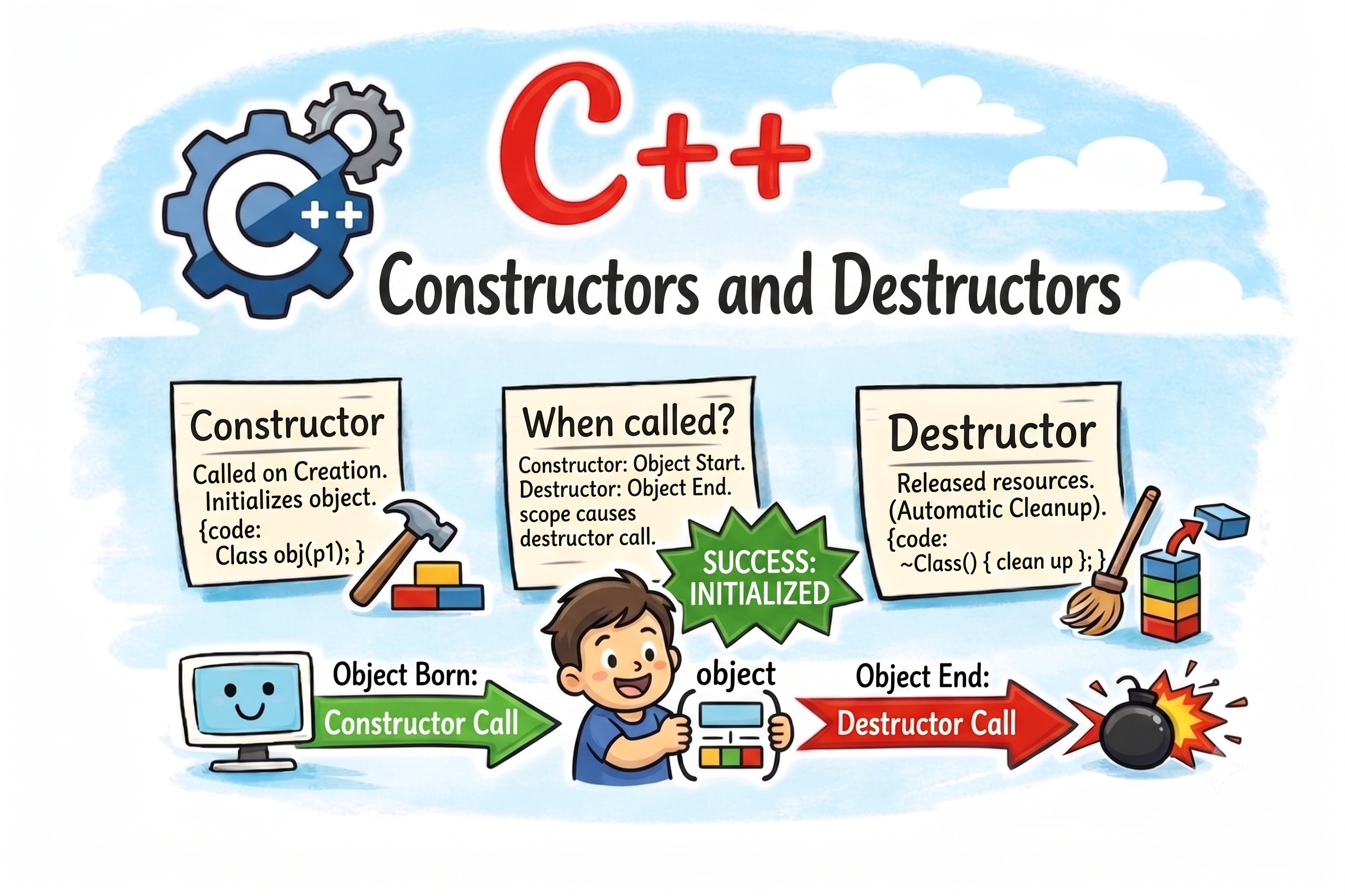
An in-depth look at constructors and destructors in C++ — the different constructor types, why destructors matter for resource management, and how they tie into the RAII pattern.
A practical guide to pointers and references in C++ — what they actually are, how they differ, common pitfalls like dangling pointers, and when to reach for each one.

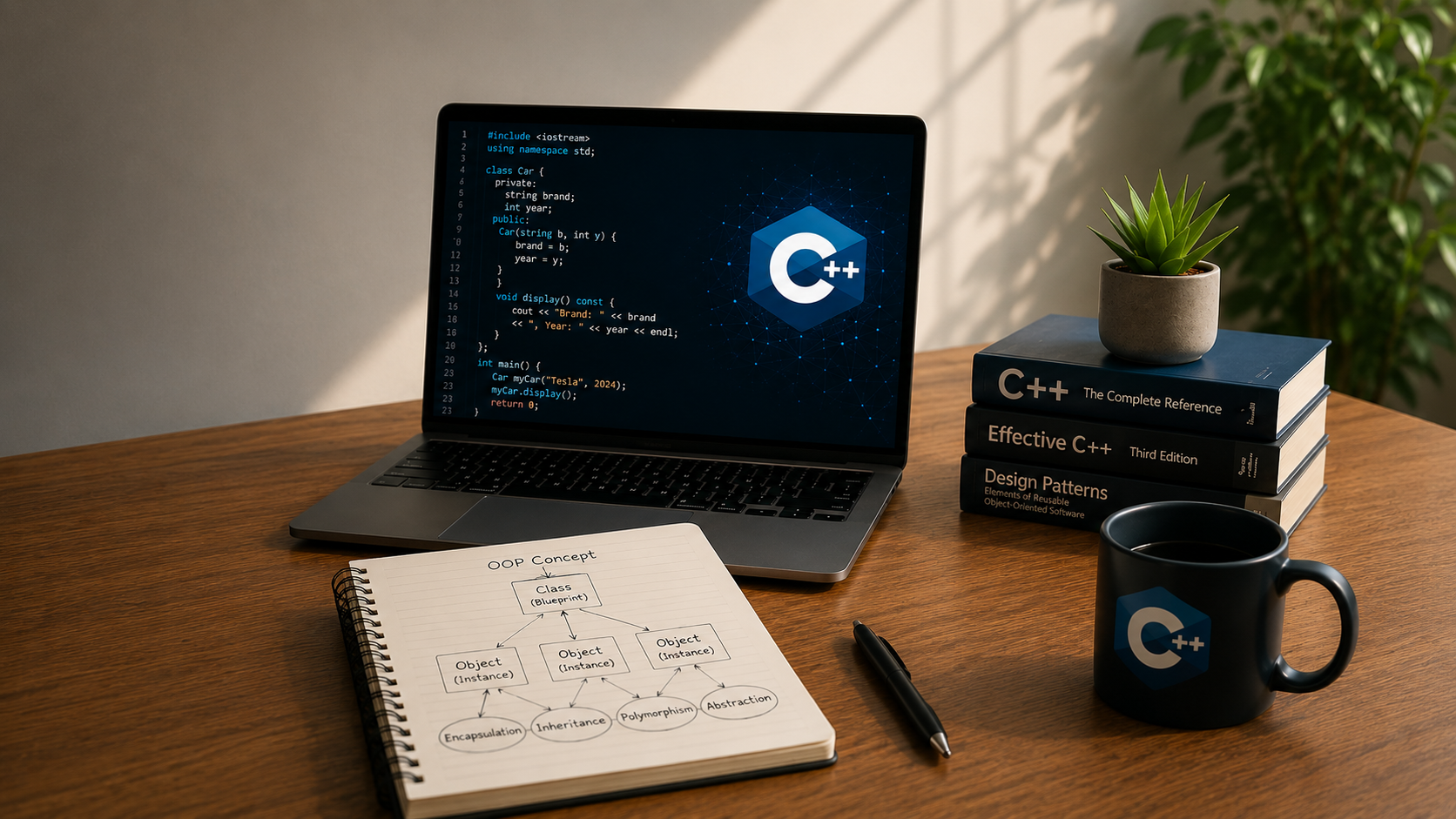
A clear walkthrough of object-oriented programming in C++ — what classes and objects actually are, and how encapsulation, inheritance, polymorphism, and abstraction work together in practice.

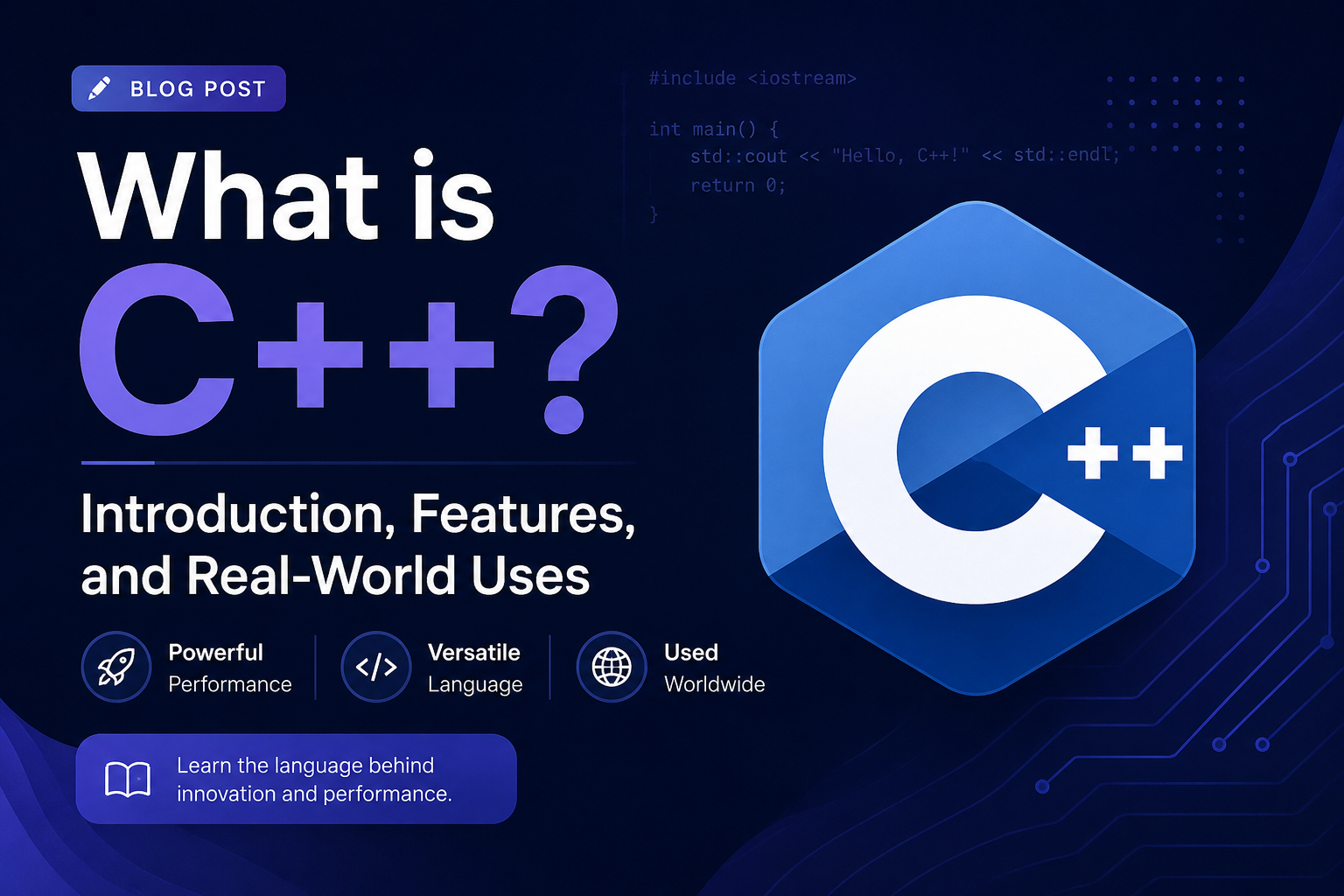
A beginner's introduction to C++ — what it is, how it grew out of C, the features that made it last for decades, and where it's actually used in the real world today.

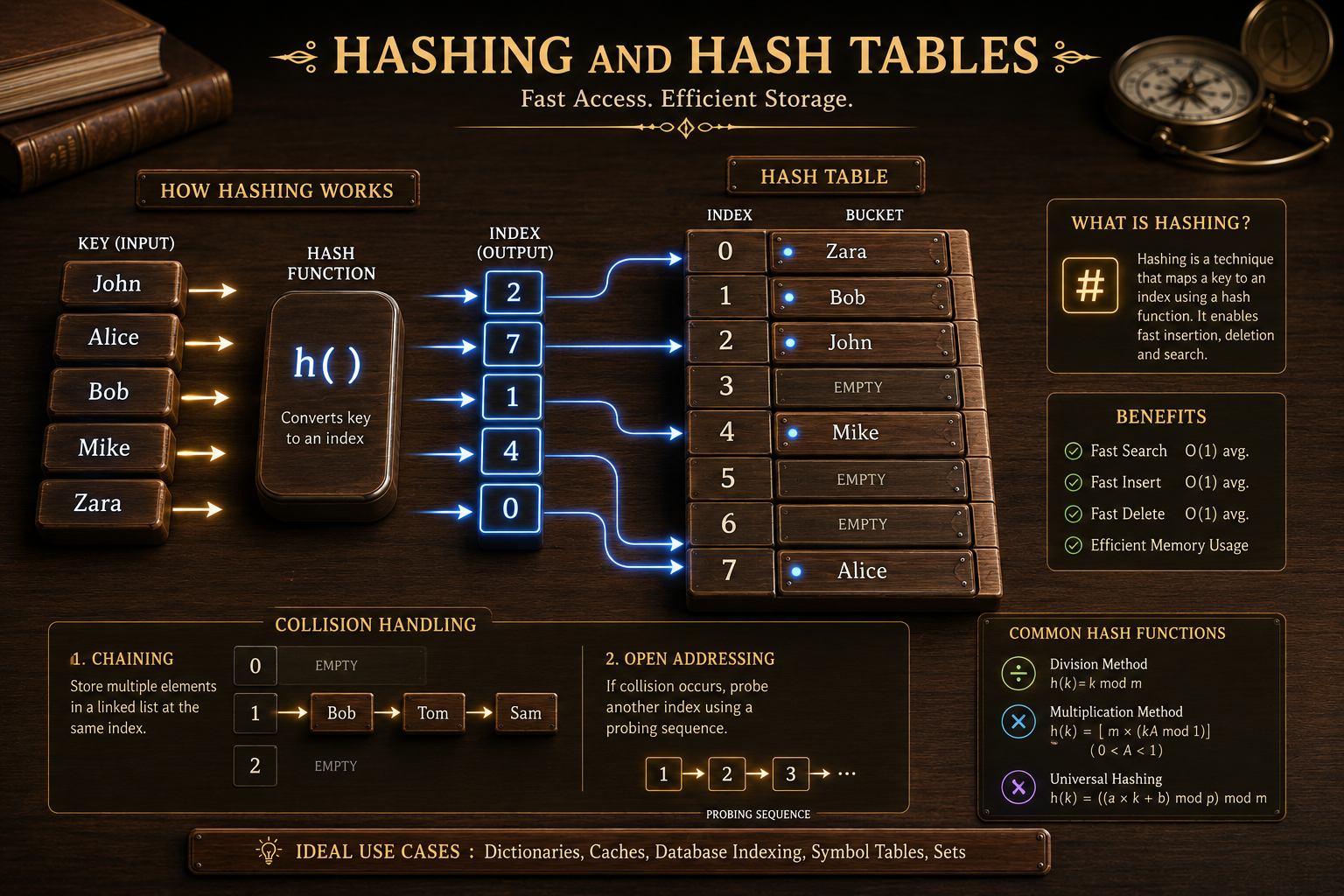
A clear explanation of hashing and hash tables — how a hash function turns data into an address, what happens when two items collide, and why this structure powers dictionaries, caches, and databases everywhere.

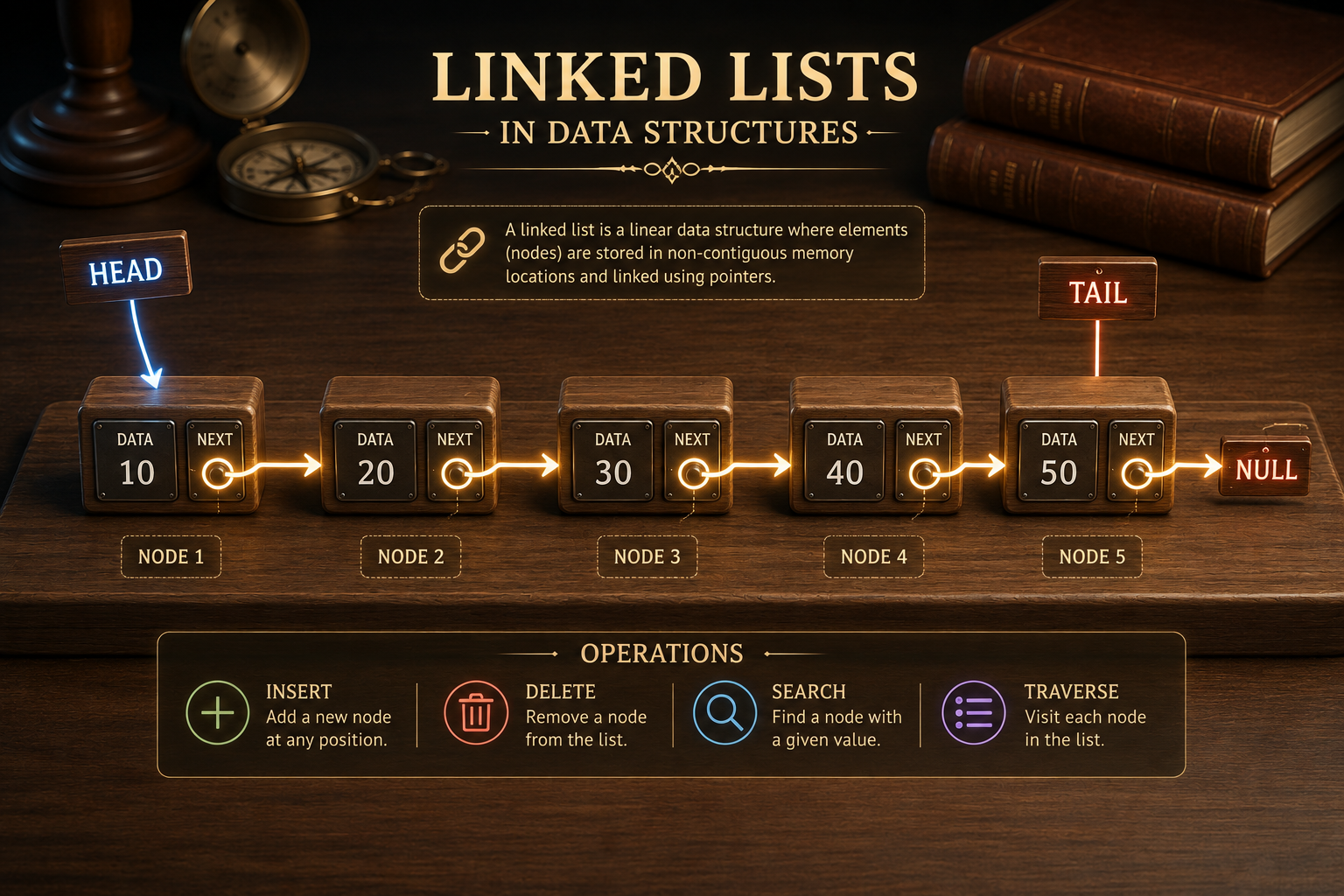
A beginner-friendly guide to linked lists — how they differ from arrays, the singly/doubly/circular variants, when to actually use one, and a working implementation.

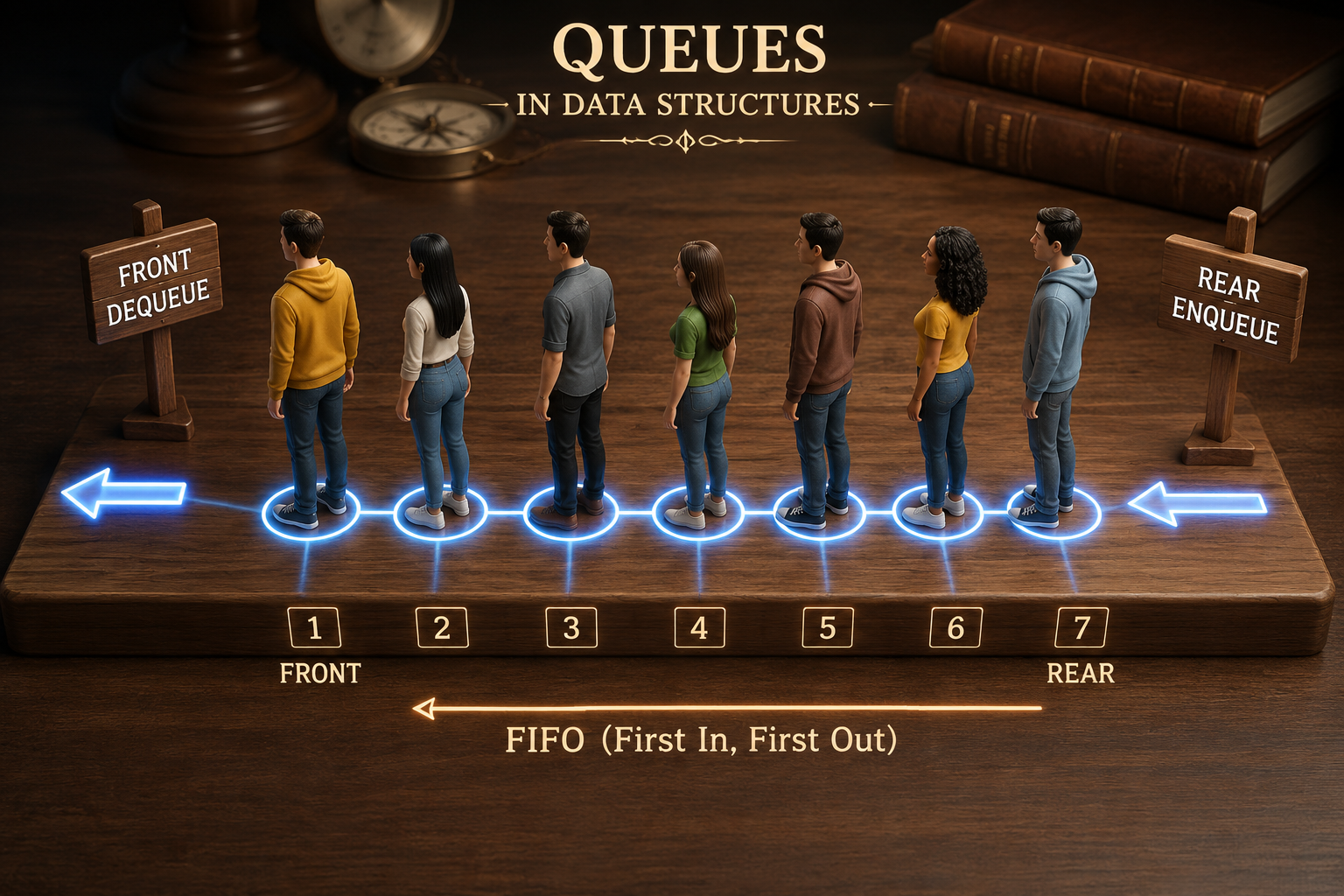
A practical guide to the queue data structure — how FIFO differs from a stack, the different flavors of queues, real-world uses like task scheduling and BFS, and a working implementation.

A clear, beginner-friendly breakdown of the stack data structure — how LIFO actually works, the core operations, where stacks quietly run behind the scenes in every program you write, and a working implementation.

A beginner-friendly walkthrough of the N-Queens problem — why brute force fails, how backtracking solves it step by step, and what this classic puzzle teaches you about writing smarter recursive code.

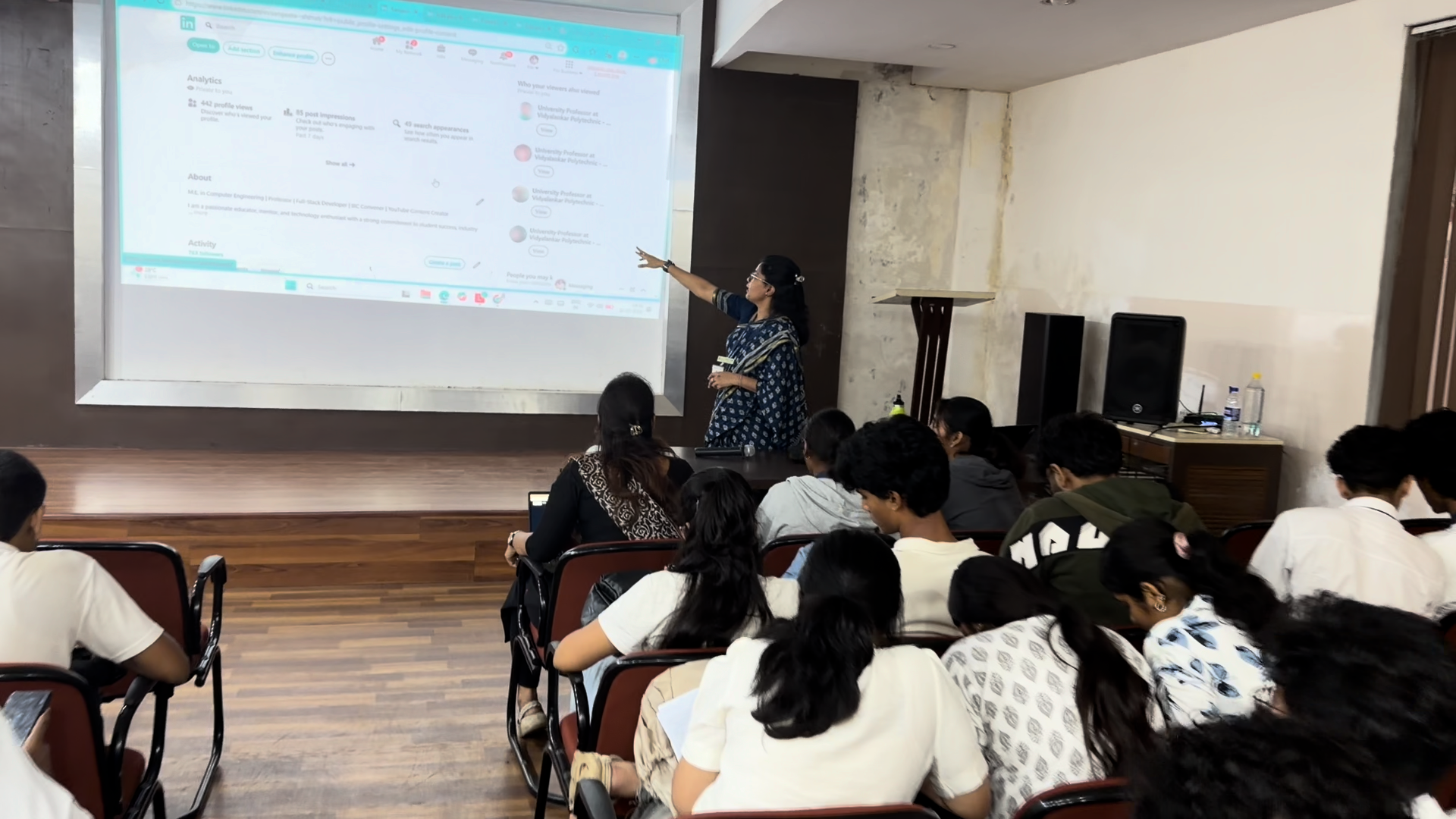
A recap of our session on the Structural Internship Framework — why career planning starts in first year, what actually makes an internship worth doing, and how to build a resume when you think you have "no experience."

Every search box you've ever built fired way too many requests. Here's the hook that fixes it, why it works, and where it still breaks.